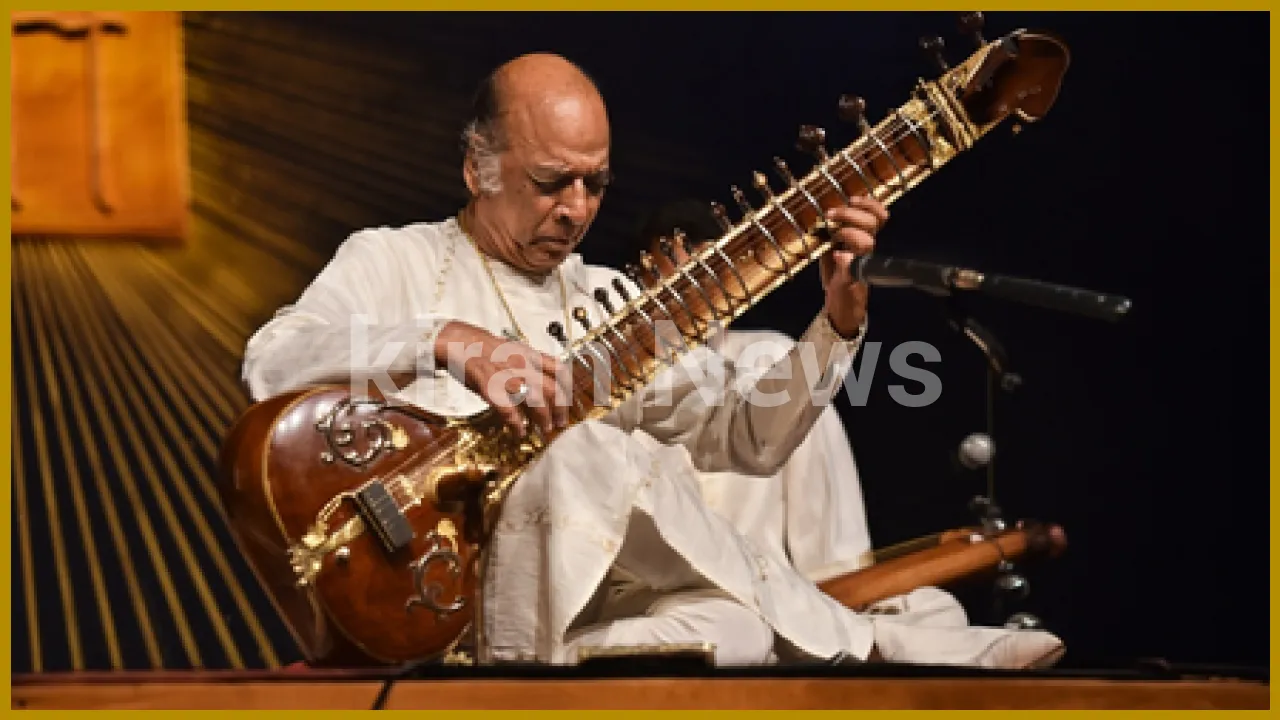
New Delhi, March 13: The Indian music world has seen many stars whose artistry resonates deeply with audiences. One such luminary is Ustad Vilayat Khan, affectionately known as the ‘Aftab-e-Sitar’. He elevated the art of sitar playing to new heights and made significant contributions to the modern sitar. His dedication was so intense that during practice, his fingers would often bleed, yet he never faltered.
He believed that if a finger were to be cut while playing thousands of notes, stopping would mean starting all over again. It was this discipline and determination that allowed him to infuse the sitar with a vocal style, creating an illusion for listeners that they were hearing singing. Today marks the anniversary of his passing.
Born into a musical family, Ustad Vilayat Khan was the son of Ustad Inayat Hussain Khan and the grandson of Ustad Imdad Khan, both renowned sitar players. His passion for music was evident from a young age. He advanced the traditional style of sitar playing and developed his unique ‘gayaki ang’ style, which imbued the sitar with the sweetness and emotion akin to singing. He skillfully incorporated vocal elements like meend, gamak, and bol into his sitar performances, making them sound lyrical.
Ustad Vilayat Khan was the first to present Indian Classical Music internationally in post-independence India. He performed on stage for nearly five decades, contributing not only to classical music but also to films. He provided sitar music for acclaimed films such as Satyajit Ray’s ‘Jalsaghar’, ‘The Guru’, and ‘Kadambari’. His performances were marked by depth and emotion, captivating audiences.
His dedication to practice was legendary; he often recounted how his fingers would move so swiftly that they would get cut, leaving bloodstains on the tin wall beside him. Friends would ask about the patterns created, but he would simply attribute them to hard work. Ustad Vilayat Khan believed that stopping meant starting from scratch again. This passion and commitment made him a great artist. His sons, Sujat Hussain Khan and Hidayat Khan, also became celebrated sitar players. Ustad Vilayat Khan maintained a strong sense of pride in classical music and placed his art above all else. His legacy continues to inspire musicians today.