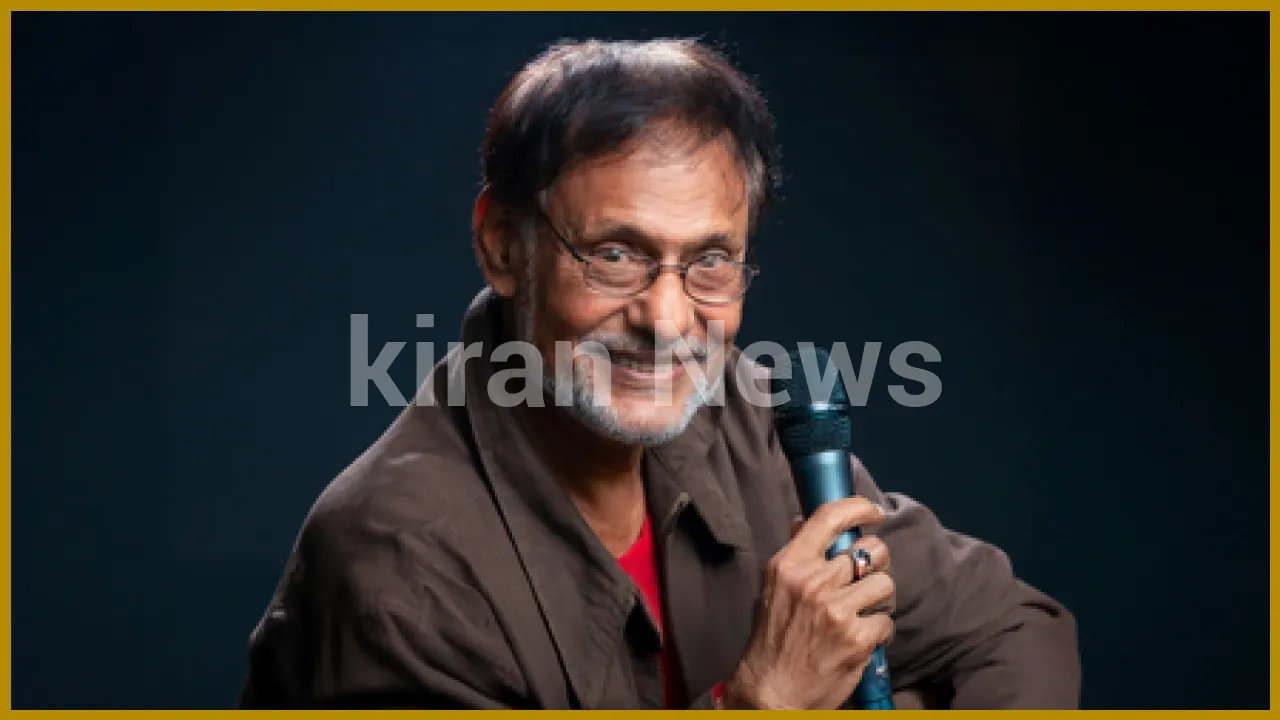
Mumbai, March 26: Ajit Varma, a shining star of the bygone era, left an indelible mark on both parallel and mainstream Hindi cinema. Born on March 26, 1947, in Kolkata, Varma’s passion for music ignited at a young age, leading him to run away from home at just 16. He faced numerous hardships during his early years, which ultimately shaped his musical journey.
Varma’s talent flourished as he learned the intricacies of music while living near renowned composer Salil Chowdhury. His dedication caught Chowdhury’s attention, who invited him to join his orchestra. In 1970, Varma moved to Mumbai, where he met music arranger Sebastian D’Souza, who encouraged him to join the famous Shankar-Jaikishan orchestra. His debut performance on drums left a lasting impression, leading to his immediate acceptance into the group.
Throughout his career, Varma contributed memorable music to films such as “Mera Naam Joker,” “Anand,” and collaborated with the duo Laxmikant-Pyarelal. He made his debut as an independent composer in 1976 with the film “Noor-e-Ilahi,” but it was his work in Govind Nihalani’s “Aakrosh” in 1980 that truly established his reputation. His compositions for “Vijeta” and “Ardh Satya,” as well as Mahesh Bhatt’s “Saaransh,” continue to resonate with audiences today.
Known for his rich and intricate musical arrangements, Varma’s background scores added depth to the narratives of the films he worked on. He also provided opportunities to emerging voices like Madhuri Purandare and Vandana Khandekar. His last film was “Yeh Aashiqui Meri” in 1998, and he delivered his final background score for “Life is Good” in 2012. Ajit Varma passed away on December 26, 2012, leaving behind a legacy that continues to inspire musicians and filmmakers alike.