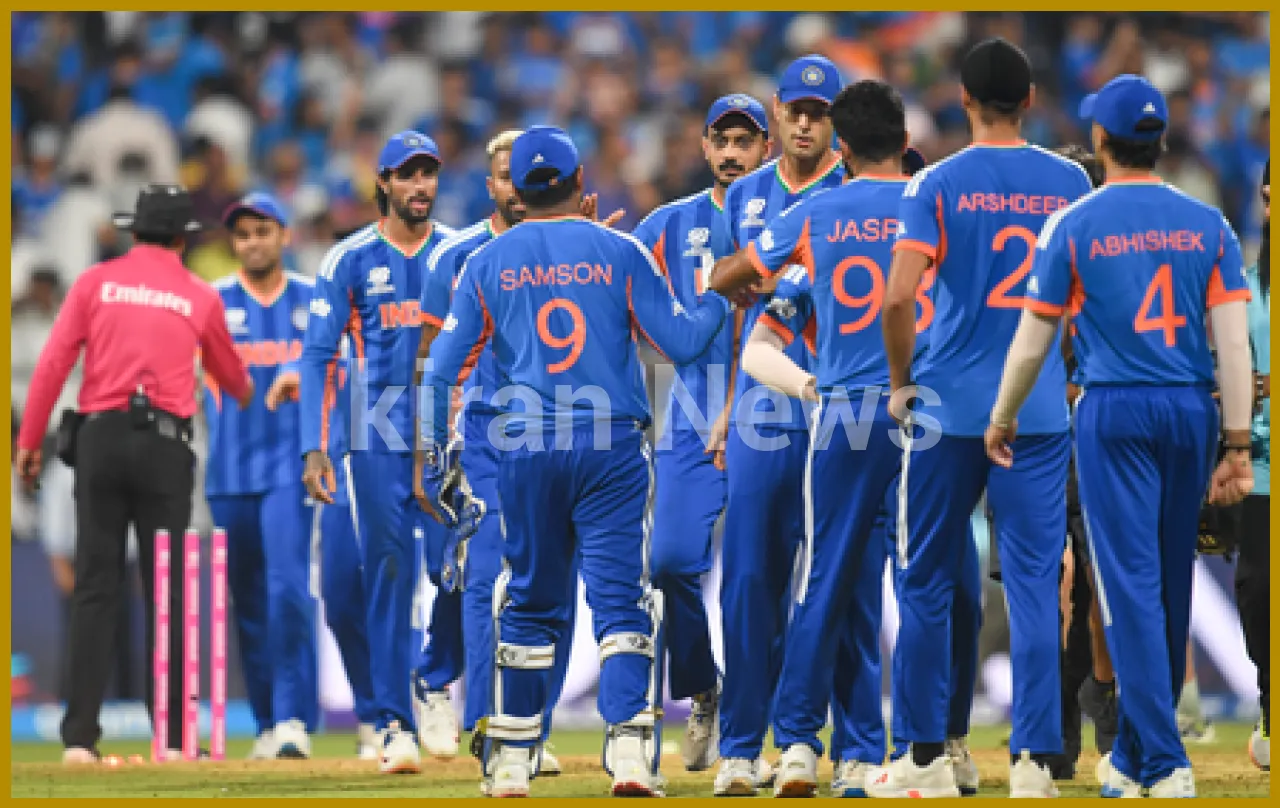
New Delhi, March 7: The final of the T20 World Cup 2026 will see India clash with New Zealand on March 8 at the Narendra Modi Cricket Stadium in Ahmedabad. This marks India’s fourth appearance in the finals and their second consecutive time, while New Zealand reaches the final for the second time in tournament history. Historically, India has had the upper hand against New Zealand in the shortest format of cricket.
A total of 30 T20 internationals have been played between India and New Zealand, with India winning 16 matches and New Zealand winning 11. However, India has yet to secure a victory against New Zealand in T20 World Cup matches, having lost all three encounters in the tournament’s history.
India secured their place in the final by defeating England in the semifinals. Batting first, India scored 253 runs for the loss of 7 wickets in 20 overs, with Sanju Samson leading the charge with a remarkable 89 runs off 42 balls. Shivam Dube also contributed significantly, scoring 43 runs off 25 balls. England, chasing a target of 254 runs, managed only 246 runs for the loss of 7 wickets in their 20 overs.
The final presents India with a golden opportunity to make history, as no team has ever won the T20 World Cup title consecutively. On the other hand, New Zealand dominated South Africa in their semifinal, winning by 9 wickets. Chasing a target of 170 runs, New Zealand achieved the score in just 12.5 overs, losing only one wicket, with Finn Allen scoring a blistering unbeaten century off just 33 balls, making him the fastest centurion in T20 World Cup history.
Despite their strong performance, New Zealand’s middle order has struggled in the tournament, with Daryl Mitchell and Mark Chapman finding it difficult to score runs. In bowling, Rachin Ravindra has been a standout performer with 11 wickets, while Matt Henry has excelled with the new ball.