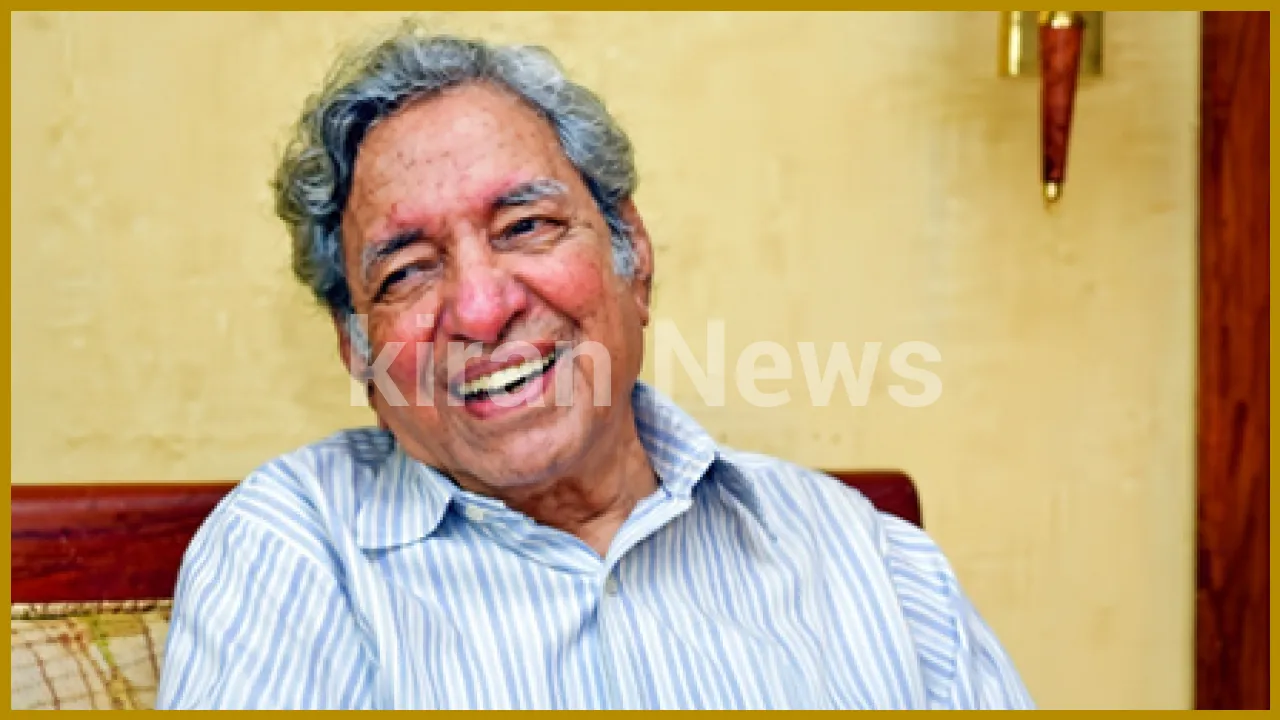
Mumbai, March 7: Achieving fame in the music industry often demands immense sacrifice and perseverance. Many artists have risen from poverty and struggle to carve out a unique identity for themselves globally. One such prodigious talent was Ravi Shankar Sharma, popularly known as Ravi in the ENTERTAINMENT world.
Remarkably, Ravi never received formal classical training; instead, he gained his musical knowledge by listening to his father’s devotional songs. He learned to play the harmonium at a young age and became proficient in various musical instruments. Although his heart was always set on music, financial difficulties forced him to work as an electrician in Delhi to support his family, yet his passion for music never waned.
Ravi’s journey was fraught with challenges, but his dedication and hard work eventually established him as one of Hindi cinema’s most memorable composers. Born on March 3, 1926, in Delhi, Ravi dreamed of becoming a playback singer and making a name in film music. In 1950, he arrived in Mumbai with high hopes. The initial phase was anything but easy; he had no place to stay and spent his days wandering studios while sleeping at Malad railway station at night. This struggle continued for two years, but Ravi never lost hope.
His perseverance paid off in 1952 when he met composer Hemant Kumar, which led to his first opportunity to sing in the chorus for “Vande Mataram” in the film “Anand Math.” This marked the beginning of his journey as a composer, leading to significant success.
In 1955, he began his music direction career with the film “Albelia.” Following this, he composed music for several notable films, including “Vachan,” “Narsi Bhagat,” “Delhi Ka Thug,” “Dulhan,” “Ghar Sansar,” “Mehndi,” “Chirag Kahan Roshni Kahan,” “Nayi Rahein,” “Pehli Raat,” “Apna Ghar,” “Aanchal,” and the immensely popular “Chaudhvin Ka Chand.”
One of Ravi’s unique traits was his approach to songwriting; he would first have the lyrics written before composing the music, resulting in melodies that were both catchy and memorable. His work on “Chaudhvin Ka Chand” earned him a Filmfare Award nomination. He won Filmfare Awards for “Gharana” in 1961 and “Khandan” in 1965. Other successful films he worked on include “Nazrana,” “Pyar Ka Sagar,” “Modern Girl,” “Salaam Memsaab,” “Tower House,” “Chinatown,” “Aaj Aur Kal,” “Gehra Daag,” “Gumrah,” “Bharosa,” “Shehnai,” “Kajal,” “Waqt,” “Do Badan,” “Aurat,” “Hamraaz,” “Aankhen,” “Do Kaliyan,” “Neel Kamal,” “Aadmi Aur Insaan,” “Anmol Moti,” “Badi Didi,” “Doli,” “Ek Phool Do Maali,” “Dhadkan,” “Dhundh,” “Ek Mahal Ho Sapnon Ka,” “Amanat,” and “Aadmi Sadak Ka.”
Ravi composed many hit songs for Mahendra Kapoor and contributed music to over 50 Hindi films. After taking a break from film music between 1970 and 1982, he made a remarkable comeback with B.R. Chopra’s “Nikaah.” From 1984 to 2005, he also composed music for Malayalam films under the name “Bombay Ravi.”
Ravi Shankar Sharma passed away on March 7, 2012, in Mumbai, leaving behind a rich legacy in the world of music.