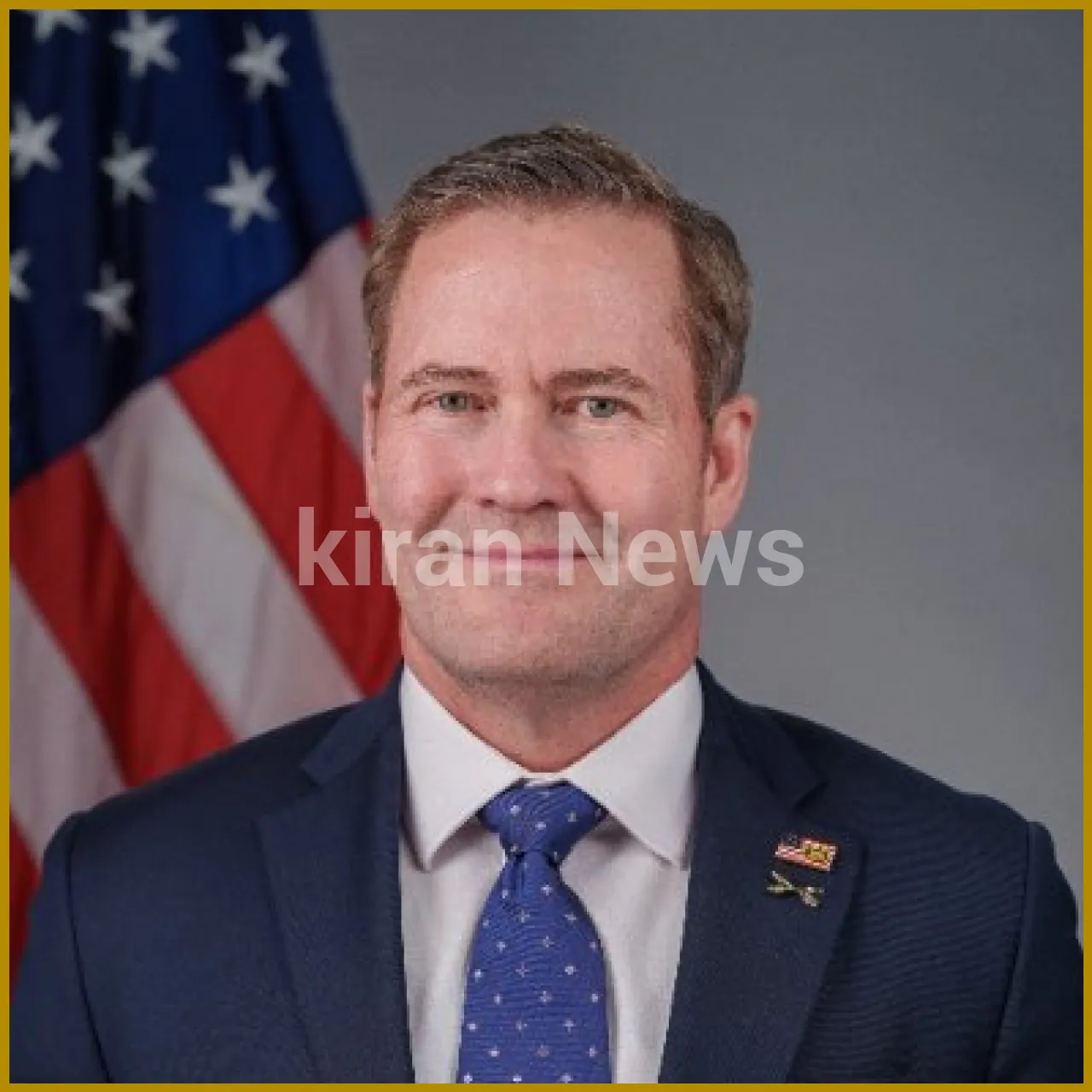
Washington, March 23: The United States is pursuing a dual strategy regarding the Strait of Hormuz, balancing responsibilities with allied nations while also warning of direct military action if necessary. This was stated by Mike Waltz, the US Ambassador to the United Nations, during an appearance on CBS News’ “Face the Nation.”
Waltz emphasized that the US could advance on both fronts simultaneously, clarifying that it is not essential for the US to rely solely on military force or depend entirely on allies; both options can coexist.
He noted that several countries, including Italy, Germany, and France, have stepped forward to assist in this mission. Additionally, Japan has pledged naval support, given that a significant portion of the oil exiting the Gulf is destined for Asia.
Waltz also mentioned that the US is prepared to escalate its actions if necessary. He reiterated that the President has made it clear that Iran’s military capabilities, including missiles, naval forces, and drone capabilities, will be continuously weakened.
This statement comes at a time when President Donald Trump has warned Iran to reopen the Strait of Hormuz, or face potential attacks on its energy infrastructure. Waltz stated that no options have been completely ruled out for the President.
According to Waltz, Iran’s military and civilian systems are deeply intertwined. He pointed out that the Islamic Revolutionary Guard Corps controls significant portions of the country’s infrastructure, economy, and many government institutions.
He asserted that if Iran’s military capabilities and defense production are being weakened, all options must remain open.
In response to concerns raised by the United Nations regarding potential war crimes related to attacks on energy infrastructure, Waltz defended the US stance. He stated that Iran uses its critical infrastructure not only to suppress its own people but also to launch attacks on neighboring countries and to advance towards nuclear weapons despite UN sanctions.
Waltz clarified that the US would only target military installations during any attacks. He emphasized that the President, Pentagon, and their team would ensure that the targets remain limited to Iran’s military framework. He accused Iran of deliberately mixing military sites with civilian areas.
Discussing Iran’s missile capabilities, Waltz referenced recent developments that challenge previous intelligence assessments. He noted that the UK recently condemned a medium-range ballistic missile launched towards Diego Garcia, stating that such missiles could reach European capitals.
He also accused Iran of concealing its technological advancements through its civilian space program, asserting that integrating space technology with missile technology is not particularly difficult.
Waltz described the US strategy as a proactive measure, stating that the President is taking timely actions to prevent Iran from becoming a fully nuclear power, drawing a comparison to North Korea.
He dismissed public skepticism in the US regarding this issue, asserting that approximately 90 percent of the Republican Party supports Trump‘s efforts. He stressed that the President’s top priority is the safety of American citizens.
In conclusion, Waltz reiterated that no options have been ruled out, including the possibility of ground action if necessary. He stated that the US will keep all avenues open to achieve its objectives.