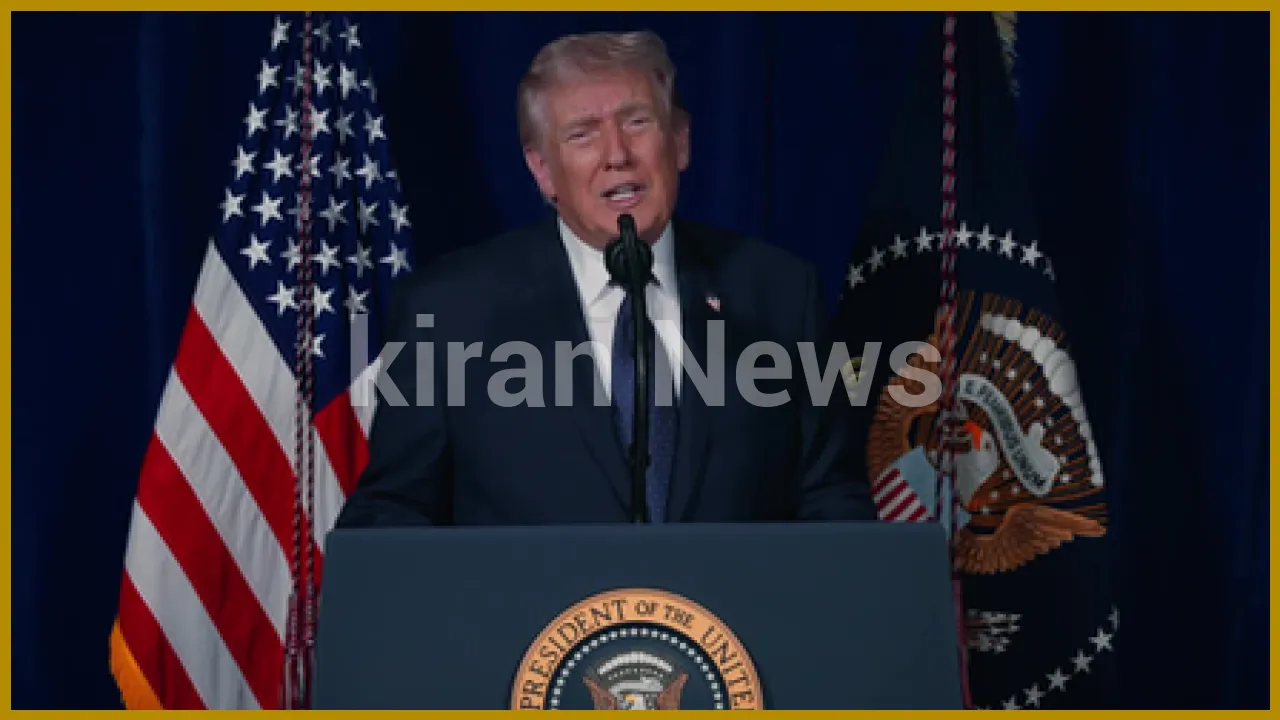
Washington, March 17: U.S. President Donald Trump expressed his frustration on Tuesday over NATO allies’ refusal to participate in the American Military Campaign against Iran. He stated that the majority of NATO countries have indicated they do not wish to join the U.S. efforts against what he termed Iran’s “terrorist regime.”
In a statement, Trump remarked, “Most of our NATO allies have told us they do not want to join our military campaign against Iran.” However, he noted that nearly all nations agree that Iran should not be allowed to acquire nuclear weapons under any circumstances.
Commenting on NATO’s stance, Trump said he was not surprised by their response. “I have always believed that NATO is a one-sided arrangement; we protect them, but they do nothing for us when needed,” he added.
Trump claimed that the U.S. military has significantly weakened Iran’s military capabilities, stating, “We have eliminated Iran’s navy, air force, air defense, and radar systems, and nearly eradicated their top leadership.”
He emphasized that following these military successes, there is no longer a need for assistance from allies. “We neither want nor need NATO countries’ help—nor did we ever,” he asserted.
Trump reiterated this sentiment regarding Asian partners such as Japan, Australia, and South Korea, saying, “We do not need anyone’s help.” He had previously expressed his dissatisfaction with allied nations’ responses during a meeting in the Oval Office, specifically mentioning the United Kingdom’s lack of support after he requested the deployment of warships and minesweepers.
“I later said that their help is no longer needed. I needed assistance at the beginning, not after the victory,” he remarked.
He also highlighted the significant role the U.S. plays in ensuring the security of countries like Japan, South Korea, and Germany, which have American troops stationed abroad.
It is noteworthy that NATO, established in 1949, operates on the principle of collective defense, with the U.S. being the largest military and financial contributor. There have long been disagreements between the U.S. and its allies regarding defense spending and the distribution of responsibilities.
Iran’s nuclear program has been a critical issue in U.S. Middle East policy for years. During his first term, Trump withdrew the U.S. from the 2015 Iran nuclear deal, stating that the agreement did not prevent Iran from permanently developing nuclear weapons.