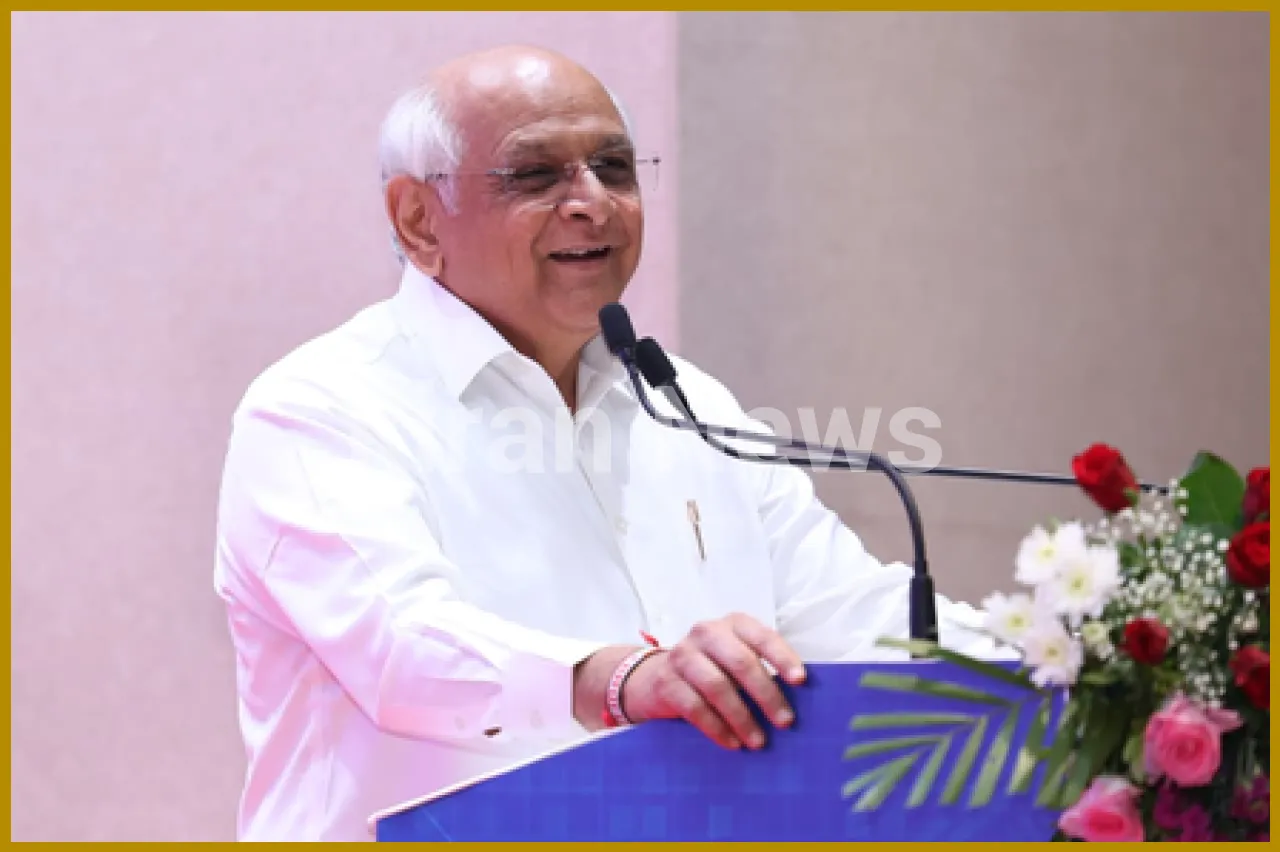
Gandhinagar, March 27: The Gujarat government has recently proposed a comprehensive draft under the ‘Uniform Civil Code Bill, 2026’, which mandates the registration of Live-In Relationships and grants equal inheritance rights to sons and daughters. Chief Minister Bhupendra Patel emphasized that these provisions aim to provide legal protection to women.
Passed in the state assembly earlier this week, the new law requires couples in live-in relationships to register their status. Failure to do so could result in imprisonment for up to three months or a fine of ₹10,000. Parents of individuals aged between 18 and 21 involved in such relationships will be notified about the registration.
The bill includes strict penalties for cases where consent is obtained through coercion, intimidation, or deceit. It also stipulates actions under the Protection of Children from Sexual Offences (POCSO) Act for cases involving minors. Additionally, penalties are outlined for individuals who engage in live-in relationships while already married.
Under these provisions, women in live-in relationships will have the right to claim alimony in the event of a separation, and children born from such relationships will be granted legal recognition, including rights related to identity, maintenance, and inheritance.
The government stated that registration would help regulate such relationships and protect the rights of women and children. The bill also proposes a uniform framework for matters related to marriage, divorce, and inheritance. Registration of marriages within 60 days is mandatory, with a penalty of up to ₹10,000 for non-compliance.
Severe penalties, including up to seven years of imprisonment, are prescribed for marriages conducted under duress, pressure, or deceit, as well as for cases of polygamy. The government believes that mandatory registration will provide legal recognition to marriages and help certify marital status, thereby reducing the potential for fraud.
According to the law, divorce proceedings will be conducted through the courts, and registration will be mandatory afterward. Divorces conducted outside the legal framework will be deemed invalid, with violations potentially leading to three years of imprisonment.
These provisions will allow women to remarry unconditionally after a legally recognized divorce. The government aims to prevent fraudulent separations, illegal divorces, and misinformation regarding marital status, while ensuring transparency in future marriages.
The law establishes uniform provisions for maintenance across all religions and grants equal inheritance rights to sons and daughters. The government asserts that this will promote Gender Equality, enhance women’s economic security, and ensure a more equitable family structure.
Presenting the bill in the assembly, Chief Minister Patel stated that this step reflects the government’s broader commitment to equality. He remarked, “This is not merely a legal procedure, but a firm intention to strengthen our national commitment to equality, justice, and unity under the leadership of the Prime Minister.”
In a broader context, he referred to Prime Minister Narendra Modi’s vision of a united and indivisible India, embodied in the concept of ‘One India, Great India’, which is a fundamental aspect of the Uniform Civil Code (UCC). The government noted that the bill was prepared after a thorough study of existing Indian laws, including the Hindu Marriage Act, the Special Marriage Act, and the Indian Succession Act, as well as significant Supreme Court and High Court rulings.
The framework of this law is inspired by the UCC implemented in Uttarakhand and similar legal models in other countries, such as the French Civil Code, the German ‘Bürgerliches Gesetzbuch’, and the Turkish Civil Code. Officials clarified that this law will not interfere with religious customs and traditions but will be limited to regulating civil and legal aspects.