
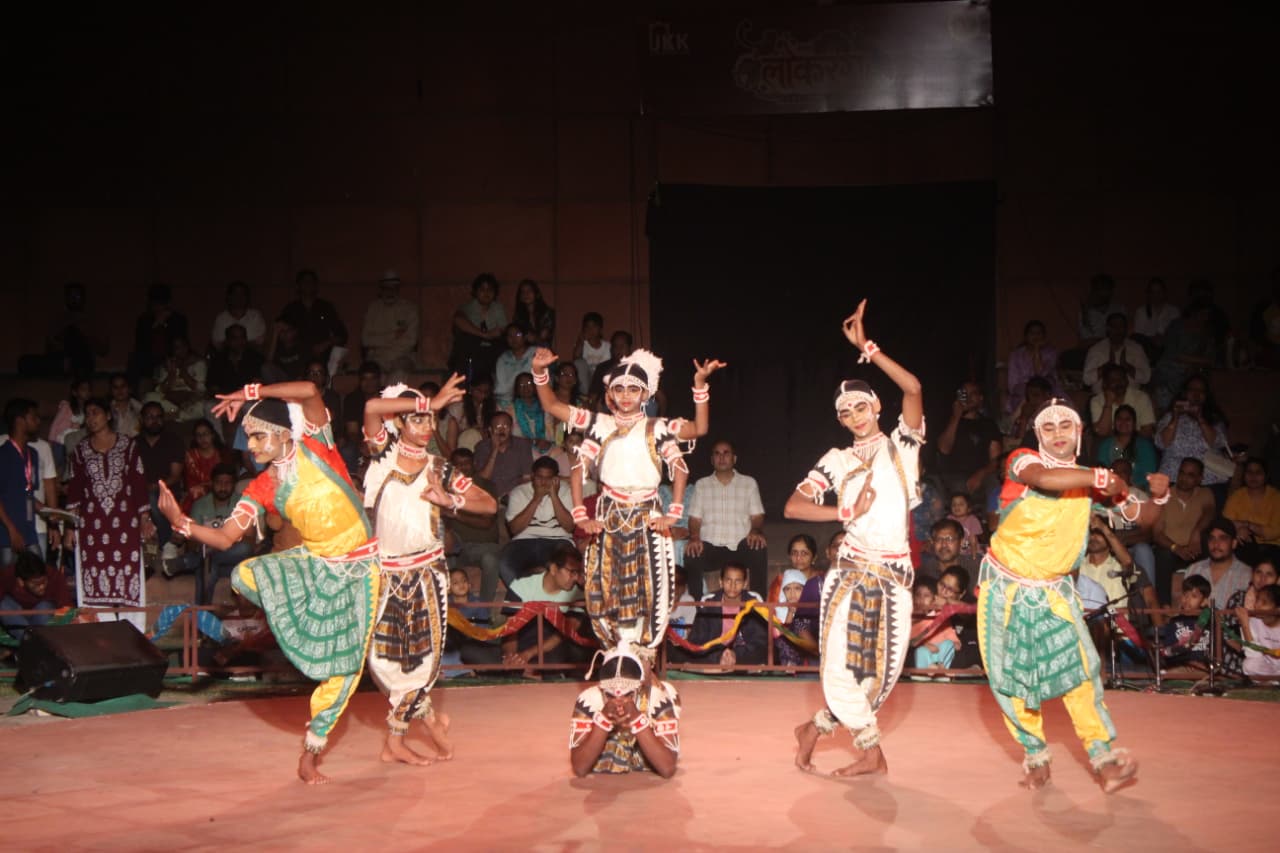
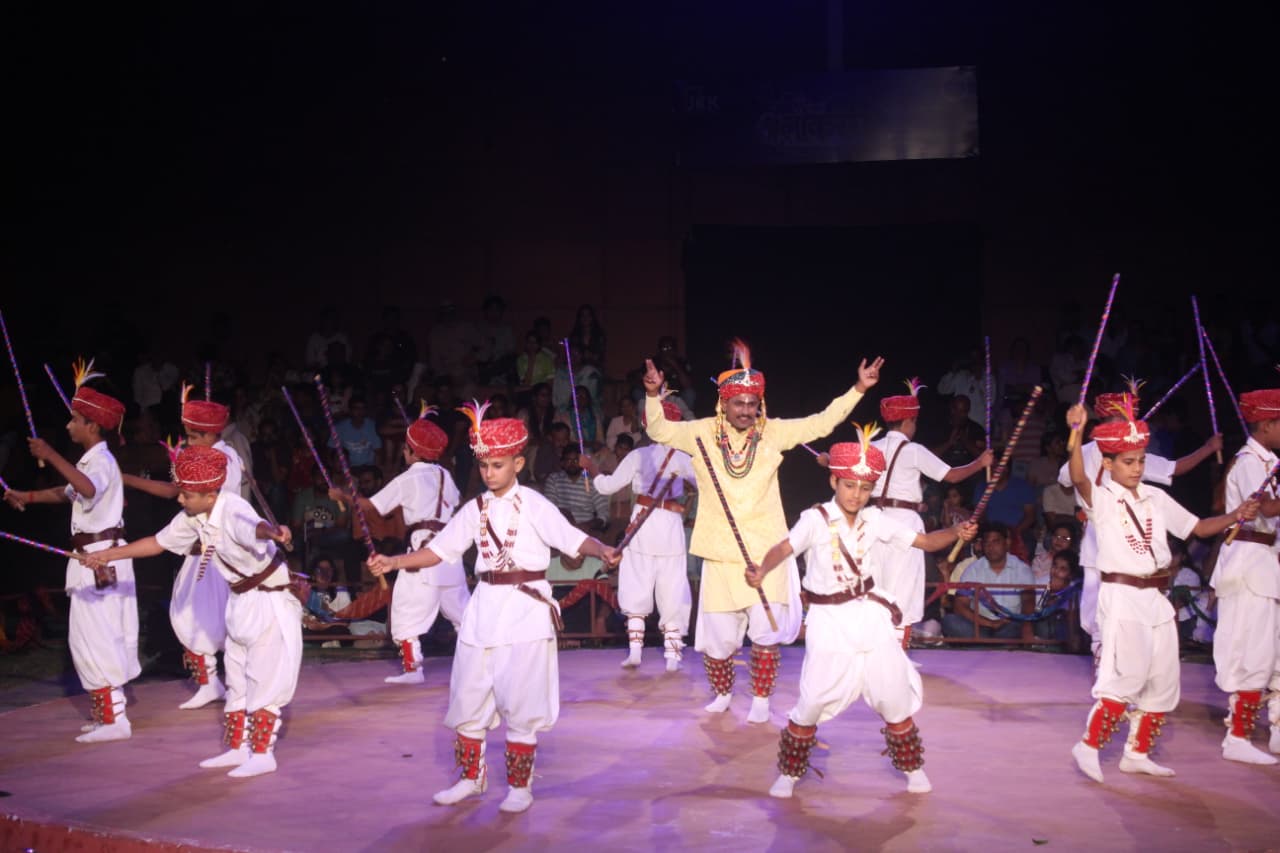
Jaipur, October 12 (Udaipur Kiran News). Enthusiastic folk performances, enthusiastic art lovers and an atmosphere drenched in the beauty of folk culture, a similar scene was seen at Jawahar Kala Kendra on Sunday. The occasion was the sixth day of the 28th Lokrang Mahotsav. Artists from different states presented 14 genres as part of the folk dance festival in Madhya Pradesh. A large number of visitors were seen buying products of artisans in the National Handicraft Fair going on in Shilpgram. Here people went shopping while enjoying cultural performances and food.
In the middle, the cultural evening started with the Manganiyar singing performance by Ghazi Khan Barna and his friends. He worshiped at the feet of Guru with the song ‘Vaari Jaun Re Balihari Jaun Re’. By singing the songs ‘Damadam Mast Kalandar’ and ‘Baisa Ladka Ghana’ he forced the audience to dance. After this, Chari dance of Rajasthan was presented, this auspicious dance is performed by the women of Gurjar community which was performed to welcome the warriors after the victory in the war. The presentation of Songi Mukhwata dance by the artists from Maharashtra thrilled everyone. The artists brought the mythological stories to life on stage by wearing huge masks. Tribal artists of Banswara district presented Holi Gair dance on the auspicious occasion of Holi.
After this, artist Rana Ram, who came from Jaisalmer, gave a melodious presentation of playing traditional folk instrument Nad on the stage. In this, he created a unique musical atmosphere by playing drums. The presentation of eastern dance from Uttar Pradesh along with emotional songs and folk compositions drenched the evening with the colors of Purvanchal. Artists from Vagad region performed in Gair Ghumra dance of Rajasthan. In this, men danced in a round circle with swords in their hands and women with handkerchiefs in their hands. The center of attraction in this presentation is the traditional jewelery worn by them.
Artists of Odisha presented art lovers with colors of devotion to Jagannath Mahaprabhu in Gotipua dance. In this dance incorporating classical elements, the artists performed such postures that everyone was stunned. The tradition of men performing this dance in female attire in front of Lord Jagannath came true on the stage here. The enthusiasm of the artists in Maniyaro Raas of Gujarat was palpable. In this, the artists gave a thrilling presentation with better harmony with Dandiya. Rajasthan’s artist Mamta Devi and the group’s artists presented Chakri dance on the stage. In the Matki dance of Madhya Pradesh, the costumes of the artists with flower shoes filled the presentation with colours. Songs were sung in Malvi language and balance was demonstrated by placing it on the head. Artists from Maharashtra gave an energetic presentation of Lavani. Lavani dance was used in Maharashtra Tamasha folk theater which has now taken the form of an independent art.

In the children’s festival, the children from Balotra won the hearts of the audience with their small steps and innocent acting. This extinct folk dance was presented by the new generation so that the folk culture of Rajasthan reached every corner of the country. It was presented in an enthusiastic style on the sound of drums, thali and ghunghurus.
The last performance of the evening of the sixth day was Siddi Dhamaal by the African tribal group living in Gujarat. Artists from Ratanpur, Bharuch, dressed in unique costumes, presented Siddhi Dhamaal. This was a thrilling presentation. It was told that 700 years ago Hazrat Baba Gor had come to India with his followers from East Africa. Ratanpur is the center of Siddhi community. Every year a fair is organized in Ratanpur on the occasion of Baba Gor’s Urs. Siddhi dance is performed on auspicious occasions. Baba Gore was worshiped in a presentation on African language songs in JKK.
—————