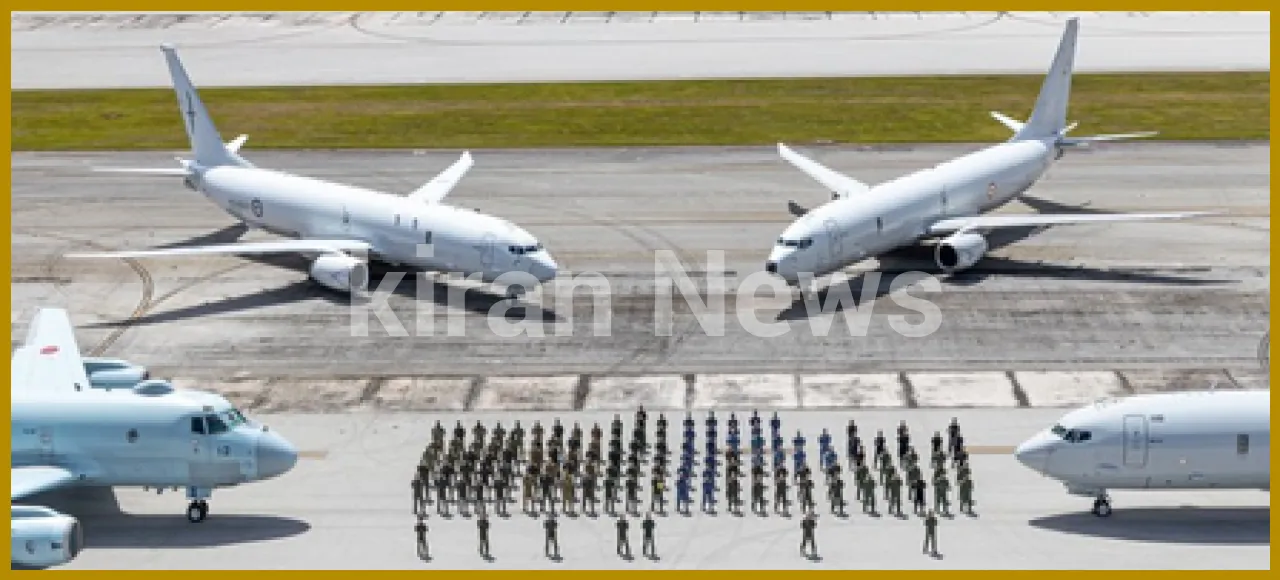
Washington, April 4: In a significant display of military collaboration, India and the United States, alongside their allies, successfully concluded a 20-day anti-submarine warfare exercise named ‘Exercise Sea Dragon 2026’ in Guam. The exercise wrapped up on March 28 at Anderson Air Force Base.
Participating nations included the United States, India, Japan, Australia, and New Zealand. The primary objective was to enhance the capability to identify and neutralize underwater threats.
The exercise was hosted by Commander Task Force 72 and featured advanced aircraft such as the U.S. Navy’s P-8A Poseidon, along with planes from the Indian Navy, Japan Maritime Self-Defense Force, Royal Australian Air Force, and Royal New Zealand Air Force. Together, they assessed their joint operational capabilities in a complex maritime environment.
Officials indicated that the exercise aimed to strengthen coordination among nations and enhance shared monitoring of maritime activities. During the drills, a mobile anti-submarine training target named ‘MK-30’ was utilized for tracking exercises. Additionally, a live exercise was conducted to locate and engage an active naval submarine.
This year, the exercise also took place around Saipan, where participating countries used recoverable exercise torpedoes, further expanding their operational capabilities.
A competitive aspect was included in the exercise, where each nation’s performance was evaluated based on real-world conditions. Japan’s Patrol and Reconnaissance Squadron 3 won the ‘Dragon Belt’ award, previously held by Australia.
U.S. officials stated that such exercises play a crucial role in maintaining regional stability, enhancing the strength and preparedness of partner nations, and helping to deter potential threats in the Indo-Pacific region.
Having been conducted annually since 2019, this exercise has become a robust platform for military cooperation in the Indo-Pacific, reflecting India’s growing strategic role and proactive maritime security policy in the region.